Wednesday, May 12, 2010

How to Confuse an Arrow with Motion

Recently I did a performance as part of Royal NoneSuch Gallery's 21 Projects x 21 Days x 21 Hours.

The concept driving this methodical drawing is quite s
imple. Imagine an arrow pointing left to right, tail to tip. Now imagine a sentence strung across a page (this particular sentence suspended on your computer screen will work just fine too). One easily could write the letters making up your sentence from right to left (In actuality, I typed these words from right to left). No matter how hard you try, you always will end up reading it from left to right. It's ingrained. For this performance drawing, I took the same idea and replaced words with an arrow--an arrowhead instead of a period. It's easy to lie with two-dimensional arrows, they are merely visual devices that imply motion. An arrow may guide your eye with clarity and authority, but it very well could be the residue of more sporadic activity. In How to Confuse an Arrow with Motion, Grant Davidson and I drew six arrows which became an accurate depiction of the physical drawing process in some respects while deceiving the viewer in other respects.


This is an image of a drawing I did leading up to the performance above; it's titled Arrows Drawn: Mapping a site-specific work. As you can see, similar ideas at play, but with slightly different quarks. This is a two-dimensional mapping of a three-dimensional drawing so the descriptions written across the bottom seem buffooned at first glance. They read, "an arrow drawn counterclockwise" and "two additional arrows drawn clockwise on a different day." This is also a nod toward my fascination with labeling and mislabeling--the latter becoming more often the norm in our constantly rebranded culture.

Sunday, December 20, 2009

Carmen Herrera -or- Inspiration Example #1


Carmen Herrera, (top to bottom) Red with White Triangle (1961); Untitled (1950); Irlanda (1952); Blanco y Verde (1966).

Carmen Herrera is an interesting painter that just popped up on my radar. I'm a fan of minimalism and with just a few elements--selective color and repeated, elongated triangles--Herrera's paintings become fascinating and unsettling. According to today's NY Times, she's new on everyone's radar--even though she has been painting since WWII. She sold her first painting a few years back at the age of 89! Perhaps Herrera will be the first in a line of inspiring figures, artists who remind me to keep on fighting the good fight.

Sunday, December 13, 2009

Gigi Gatewood


I discovered Gigi Gatewood's work through the Philadelphia Art Hotel website. A very compelling, steady gaze runs throughout her work. Gatewood did a residency with PAH. Check out PAH too because they're a great, young organization (plus my buddy Zak is one of the founders)!

http://www.gigigatewood.com/
www.philadelphiaarthotel.org

all images ©Gigi Gatewood

Saturday, December 12, 2009

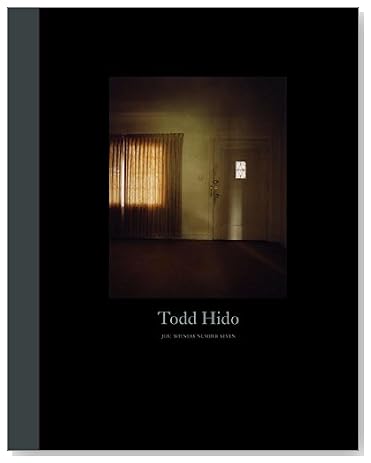
Todd Hido - Witness #7

If you haven't seen the new edition of Witness, go to SF Camerawork and buy it. It totally knocked my socks off.

Toddy Hido - Witness #7, from Joy of Giving Something, Inc and Nazraeli Press

http://www.nazraeli.com/bookdetail.php?book_id=100262
http://www.jgsinc.org/index2.php

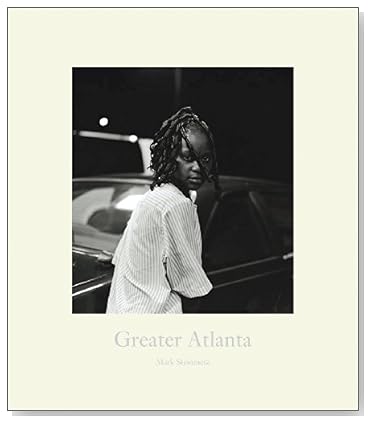
Nazraeli also just published the third installment of Mark Steinmetz' amazing "South" series, Greater Atlanta.

Tuesday, November 11, 2008

PARK Series

Here are some of the photographs from my PARK series.

PARK: Oakland, CA 2005, 20x16 inches, Chromogenic print


PARK: Claremont, NH 2005 (Miko), 20x16 inches, Chromogenic print


PARK: El Paso, TX 2005, 16x20 inches, Chromogenic print


PARK: Olympia, WA 2005 (Diane), 20x16 inches, Chromogenic Print


PARK: Provo, UT 2005, 16x20 inches, Chromogenic print


PARK: Athens, GA 2003, 16x20 inches, Chromogenic Print


PARK: Carson City, NV 2003, 16x20 inches, Chromogenic Print


PARK: Oakland, CA 2007 (Katie), 20x16 inches, Chromogenic print


PARK: Lewisburg, OR 2005 (Doug), 20x16 inches, Chromogenic print


PARK: Athens, GA 2003 (Crystal), 16x20 inches, Chromogenic print


All images © 2008 David Wolf

Vernissage Exhibition

Language is a code. Language is also a visual medium. But unlike other forms of mark making, its meaning seems more fixed and tangible. The meaning of a particular word can pass through the hand, the machine, and a conversation relatively unscathed. But not always. How a word is written may not completely alter its meaning, but it certainly can change how it functions. My investigations with language call attention to the slippage that can occur when equally considering the aesthetics and the definition of text in the same frame.


This is some of my recent work highlighted in the MFA thesis exhibition Vernissage. I am using text a lot in my work now. The sculpture in the show did not employ text explicitly like the other three works, but the wording of the title is equally vital to how the viewer approaches the artwork.


Vernissage Exhibition Installation View (West)


If the Artist (Fort Mason)
, Dimensions variable, Graphite, 2008


If this line/If this margin; Dimensions variable; Available chair, acrylic; 2008


AM #7; 49.75 x 139 x 3.5 inches; India & UltraChrome K3 ink on paper, hardware; 2008


AM #7 (detail showing three central !!!)


an attempt to get closer to you mixed with insecurity
; Approximately 1.5 x 1.5 x 46.75 inches; 2x2 pine, red plastic tie, hardware; 2008


Vernissage Exhibition Installation View (East)


All images © 2008 David Wolf

Sunday, November 9, 2008

Aaron Rosenstreich/Opening Comments


I started this blog for a few reasons. One to promote my work. Two, to promote work by artists I respect. And three, to motivate myself to investigate new artists, new work, new ideas. I hope to use this space to write a concentrated review of an exhibition at least once a month. It's a given that all artists feed off of each other and so even when I speak of my own work, I am also always nodding toward my influences. In other words, myself + someone. In most situations, it is easier to define who you are not than it is to clarify who you are. I sometimes adopt the mannerisms of my favorites without even knowing it. But I am on guard when it comes to shitty artists and I do my best not to mimic them. This site inevitably will include and quote from artists I love, and will call attention to artist I am reacting against (a mixture of Wolf+ and notKinkade).

/

Moving forward, I would like to start this site out with the work of Aaron Rosenstreich. Aaron is an easy choice because his work is strong, he has a current exhibition, he's a good friend, and because a name beginning with two a's moves him to the top of a lot of lists. He's used to being mentioned first.


Several photographs from his
Occular Landscape series can now be seen in the exhibition Frame Line at the new Hatch Gallery in Oakland, CA. The size of the photographs serves the images and the exhibition space well. Approximately 14x11 and 22x17 inches, they were large enough for me to get into the detail captured by his large format camera. Yet they were small enough to draw me closer for an intimate experiences. I have seen some of the images printed larger in a previous exhibition and I prefer the smaller versions. It's a new phenomenon to call a 22x17 inch photograph small, but larger sizes are getting easier and easier to print (and therefore becoming the norm for many photographers).

The si
ze of the work also allowed Aaron to hang quite a few images. I was happy to see the numerous groupings, but wish in the end that some were eliminated. I wish this so that his photographs and the work of the other artist in Frame Line, Edmund Wyss, could have initiated a stronger dialogue. Their work was not quite interspersed enough to trigger a sustained dialogue, nor was their work separated enough to allow me to divide my attention. It was somewhere in the middle, causing Edmund's work to punctuate Aaron's work (and vice versa). What I mean by this, is that Edmund's paintings merely provided the viewer with a break from Aaron's photos (and vice versa). If the show were hung with a more even distribution of the artists' work, Edmund's paintings would have acted as a response to--or a question for--Aaron's photographs. Ultimately, the show is not poorly hung. Simply, the elimination of a few images would have allowed the artists and the curator, Adam Hatch, to make a few key sequencing changes.

I would like to talk more about the
work itself. Before I do though, I want to return for a second viewing of the exhibition. Until then, I want to mention a couple things to notice when you view the exhibition. One, both artists' attention to detail is worth noting--something as seemingly boring as a notched metal gear or some roadside shrubbery can prove to be monumental. Two, Edmund paints photography equipment and Aaron displays the product of these tools. It would be too simple to say this exhibition is about the process of photography. So what larger questions do the artists raise?


Frame Line
Hatch Gallery
Aaron Rosenstreich & Edmund Wyss
492 23rd Street, Oakland, CA 94612
November 7 - December 5, 2008


All images © 2008 Aaron Rosenstreich

Followers